Faster than pure manual checking
Shorter analysis cycles help CSSD and perioperative teams move more trays through the workflow with less time pressure.

Syntor
Curf helps hospitals analyse trays faster than purely manual control, with consistent output and an auditable record of deviations. The focus is practical: reduce time pressure in CSSD and OR workflows while improving certainty around tray content.


Main promise
The strongest commercial wedge is not abstract AI. It is operational speed. Syntor is built to help teams analyse trays faster, keep decisions more consistent and still maintain a clear audit trail when something is missing, misclassified or needs manual review.
Shorter analysis cycles help CSSD and perioperative teams move more trays through the workflow with less time pressure.
Apply the same control logic across trays and shifts instead of relying only on individual speed and concentration.
Missing, extra or misclassified instruments can be flagged and logged with the right context for follow-up.
How it fits
Syntor is best introduced as a focused operational workflow solution: tray verification, exception handling and traceability at selected checkpoints, not as a broad hospital transformation project from day one.
Analyse the instrument set with the verification setup and compare against the expected content.
Surface missing, extra or uncertain items so staff can focus on the trays that need attention.
Keep a structured trail of tray results, exceptions and timing for quality and process improvement.

Operational dashboard
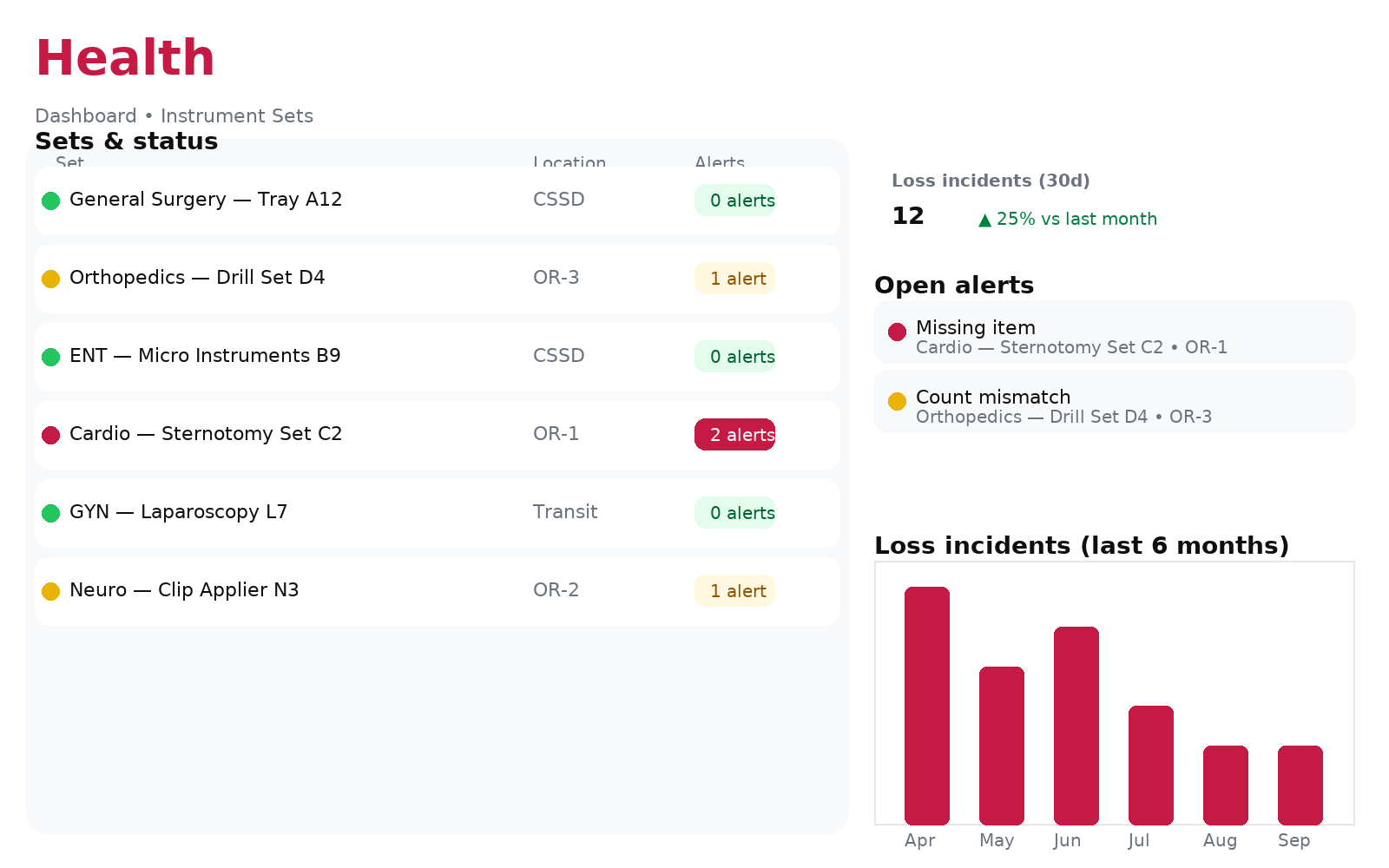
The dashboard should help teams see tray status, open exceptions, throughput and trend signals. That makes Syntor useful for operations today and easier to scale later.
Next step
We can scope a focused pilot around one tray workflow, one owner and a small KPI set that a hospital can actually evaluate.